 MoonEase
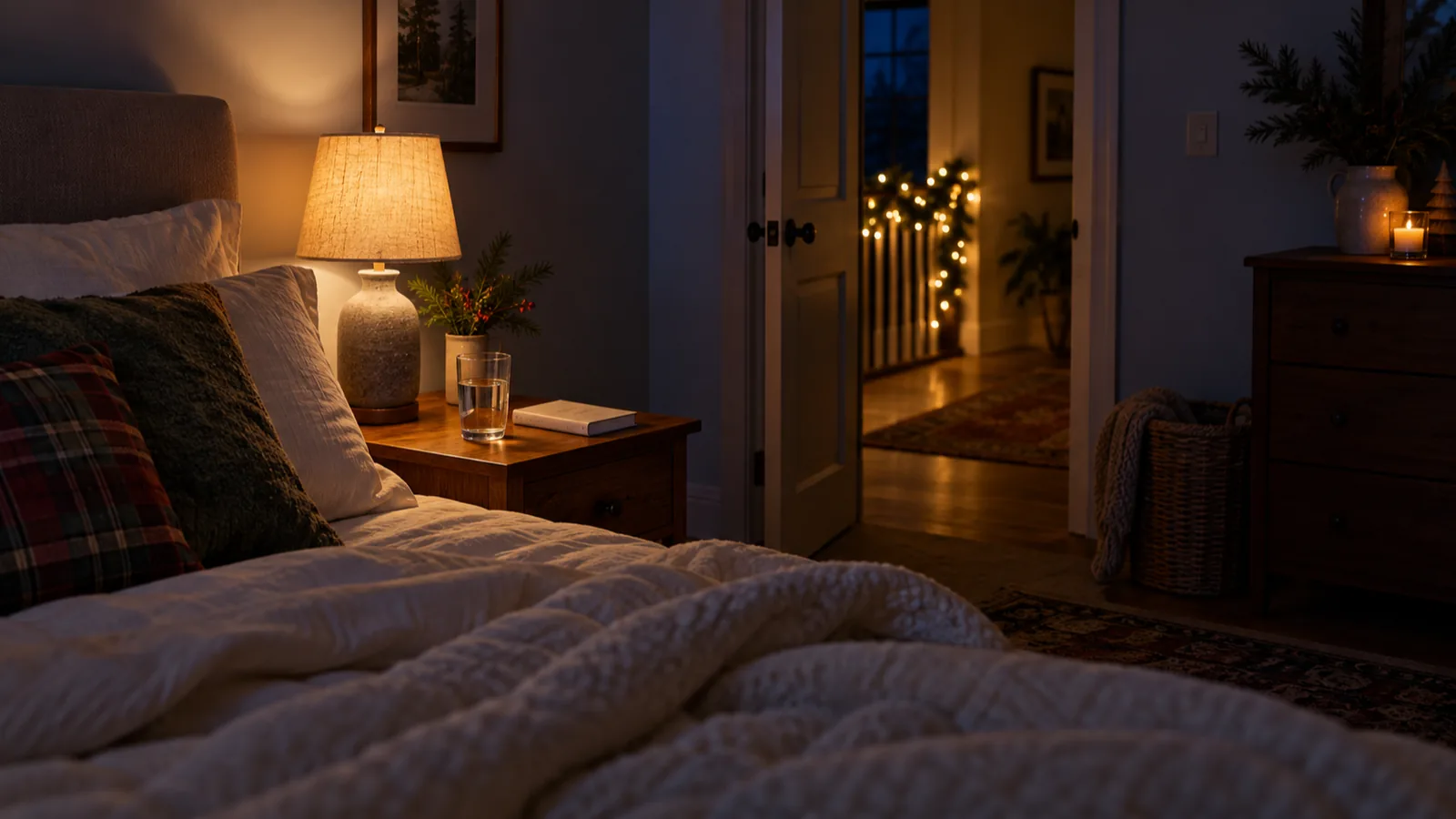
If you can't sleep during the holidays, the cause is usually one of four things: a mind full of plans, feelings that come out at night, a body clock pushed off course by late evenings, or a bed and house that aren't the usual ones. Find which one is yours and the fix gets much simpler, because a racing to-do list needs something very different from a noisy spare room.
So before the tips, a short self-check. It takes about a minute, and there are no wrong answers.
Why is it so hard to sleep during the holidays?
The stretch from Thanksgiving on Thursday 26 November to New Year's Eve on Thursday 31 December 2026 packs a lot into five weeks. There are more late nights, more rich food and drink, more travel and more people. There's also more to remember, and for many of us, more to feel.
Any one of those can nudge sleep off course. Together they can make a person who normally sleeps well lie awake night after night and wonder what's wrong with them. Usually nothing is. Your sleep is responding to a very unusual month.
The good news is that most holiday sleeplessness has an obvious cause once you look for it. That's what the check below is for.
A one-minute self-check: what's keeping you up?
For each question, pick the answer that sounds most like you this season. Keep a rough tally of your letters as you go.
- When you turn the light off, what fills your head?
A: Lists, gifts, menus and who still needs a message. B: Someone who isn't here, or a feeling you can't name. C: Nothing much, you just don't feel sleepy yet. D: The noise in the house, or how odd the bed feels. - What time are you going to bed compared with October?
A: About the same, but I lie awake longer. B: About the same, but I wake in the night. C: An hour or more later, most nights. D: It depends whose house I'm in. - How are your mornings?
A: I wake early with my mind already running. B: Heavy. It takes a while to feel ready for the day. C: I sleep in whenever I can. D: Someone else's alarm, dog or toddler wakes me. - What does a typical December evening look like?
A: Wrapping, planning or answering messages until late. B: Quieter than I'd like, or busy in a way that feels hollow. C: Parties, films, late dinners, a nightcap or two. D: A full house, a borrowed bed, or travelling. - When you do finally sleep, how is it?
A: Fine, once I get there. B: Light, with waking in the small hours. C: Fine, but I'm tired the next day. D: Broken by every door and footstep. - Which would help most right now?
A: Somewhere to put everything I'm trying to remember. B: A bit of comfort. C: A normal night. D: My own room and some quiet.
Your result at a glance
Most people get a clear leader. Two close letters? Read both.
- Mostly AThe list-makerA busy mind that won't clock off.
- Write it down
- Slow breathing
- A quiet story
- Mostly BThe heavy heartFeelings that show up when the lights go off.
- Gentle company
- Soft sound
- Talk to someone
- Mostly CThe drifting clockLate nights that have moved your body clock.
- Steady wake-up
- Morning light
- Easy on nightcaps
- Mostly DThe full houseA strange bed, a busy home, broken sleep.
- Steady sound
- Earplugs
- Set up early
Mostly A: your mind won't stop making lists
This is a very common holiday pattern. You lie down, the house goes quiet, and your brain decides it's the perfect moment to remember the cranberry sauce, the teacher's gift and the cousin you forgot to reply to.
It isn't that you're bad at switching off. Your mind is trying to be helpful. It doesn't want you to forget anything, so it keeps rehearsing. The trick is to show it everything is safely held somewhere else.
- Do a brain dump before bed, not in it. About an hour before bed, write every loose job on paper. Next to each, add one tiny next step, such as "text Marcia about Saturday". Then close the notebook.
- Keep a pen by the bed. If something new pops up at midnight, jot two words and let it go. Your phone's notes app counts less, because the screen tends to pull you into messages.
- Give your mind a duller job. Slow breathing is ideal here. Our step-by-step guide to breathing exercises to fall asleep has four patterns to try with the lights already off.
- Let a slow story take over. A calm story where nothing much happens gives your attention somewhere softer to go than the gift list.
One more thing: set a planning curfew. Holiday admin expands to fill every evening if you let it. Pick a time, maybe an hour before bed, after which the wrapping paper stays in the cupboard.

Mostly B: the season feels heavy
The holidays turn the volume up on everything, including the hard things. If you're missing someone, spending the season alone, worried about money or dreading a family gathering, night-time is often when it lands. The day is full of noise and tasks. The dark is not.
You don't need to fix those feelings to get some rest. Aim smaller: a night that feels a little less lonely and a little less loud inside your head.
- Make the evening gentle on purpose. A warm drink without caffeine, a lamp instead of the big light, something familiar on in the background. Small comforts are allowed.
- Let a voice keep you company. Many people who live alone find a quiet story or low sound makes the room feel less empty at bedtime.
- Don't lie there wrestling with it. If a feeling keeps you awake for what seems like a long while, get up, sit somewhere dim and warm, and come back when you feel sleepy.
- Tell someone in daylight. A friend, a relative, a faith leader or your doctor. Saying it out loud in the day often makes the night a little lighter.
If the holidays bring grief, loneliness or worry that feels too big to carry, please reach out to someone you trust or to your doctor. If you ever feel unsafe or think you might harm yourself, contact your local emergency number or a crisis line straight away. You don't have to get through it on your own.
Mostly C: late nights have moved your body clock
This one is sneaky. A party on Friday, a film that runs late on Saturday, a lie-in on Sunday, and by Monday your body has quietly shifted its idea of bedtime. You aren't anxious or uncomfortable. You're simply not sleepy at 11pm any more, because as far as your body clock knows, it's still early evening.
The fix is less about bedtime and more about mornings.
- Anchor your wake-up time. Get up within about an hour of your normal time, even after a late one. A short afternoon nap is kinder than a long lie-in.
- Get daylight early. A few minutes outside, or by a bright window, soon after you wake helps your body clock find its place again.
- Go easy on nightcaps. Alcohol can make you drowsy at first, but it tends to make sleep lighter and more broken later in the night. The same goes for a large, rich dinner close to bed.
- Watch the afternoon coffee. Caffeine lasts for hours. Holiday chocolate, cola and strong tea all count.
If you'd like a fuller plan for resetting your evenings, our bedtime routine for adults works back from a steady wake-up time, one step at a time.
From JPott Studios
One calm email a month
One useful tip, one free printable or tool, and a short note from our apps. Join and get the free welcome pack: printable trackers, a packing list maker and more.
Mostly D: the house, the bed or the noise is different
Sofa beds, air mattresses, a cousin who snores through the wall and a kitchen that's still busy at midnight. If your answers were mostly D, your mind is probably fine. Your surroundings are the problem.
Your brain tends to sleep more lightly in an unfamiliar room, so every creak gets noticed. You can't make a borrowed room your own, but you can make it more predictable.
- Set the room up before you're tired. Find the light switch, walk the route to the bathroom once and ask for the extra blanket while everyone is still awake.
- Bring something from home. Your own pillowcase is light and makes the bed feel more familiar.
- Use a steady sound. Low rain or a soft hum near your pillow smooths over the sudden bangs that pull you out of light sleep. Our guide to rain sounds for sleep explains why steady sound works, and how loud to play it.
- Earplugs and an eye mask. Cheap, small and worth it for a streetlight or an early riser.
If you're travelling to get there, our guide to sleeping well when travelling for Thanksgiving has a full sleep kit checklist that works just as well at Christmas.
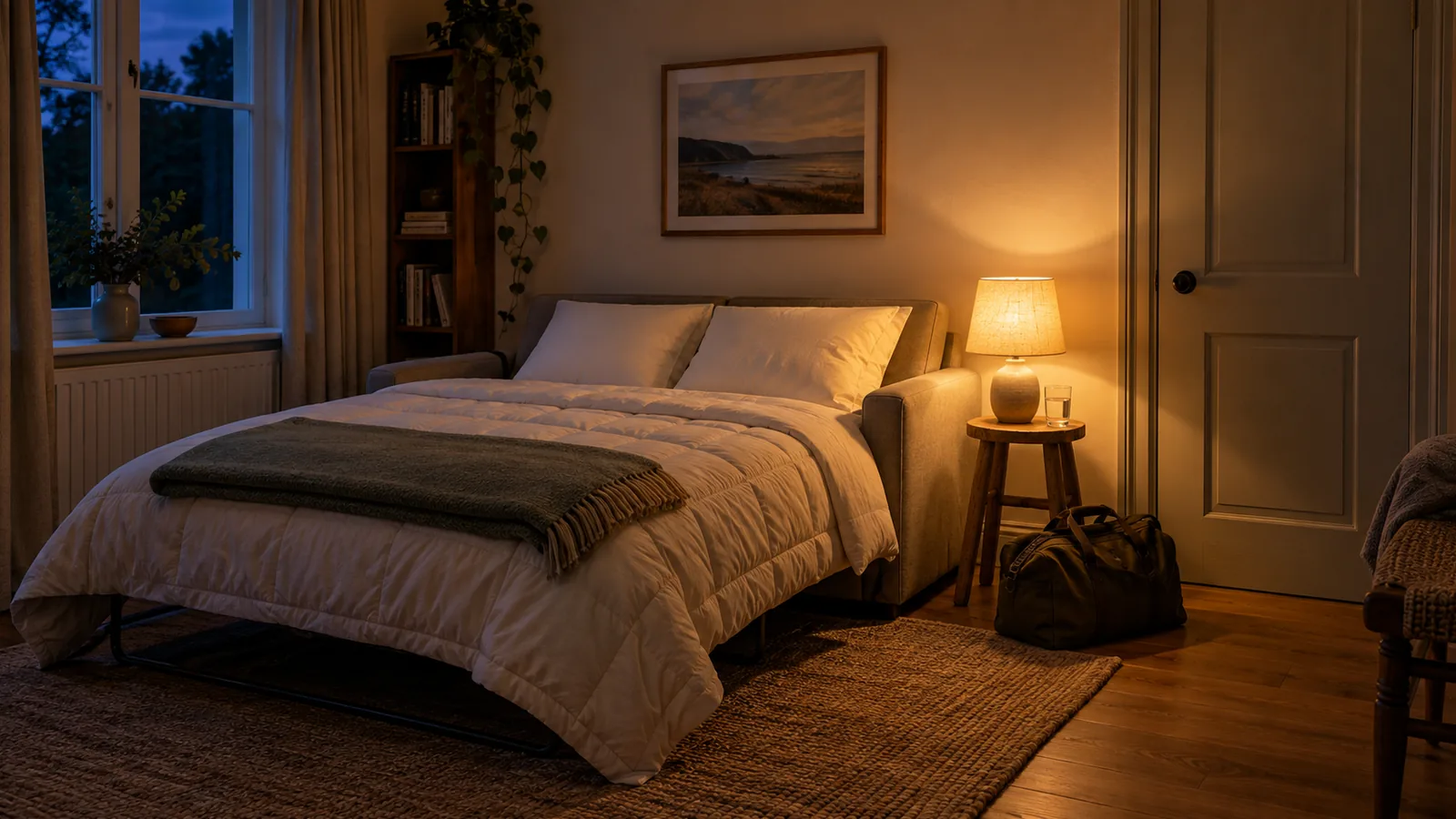
A bit of everything? Try a 20-minute holiday wind-down
Plenty of people get a mix of letters, especially in the week before Christmas, when the lists, the late nights and the visitors all arrive at once. In that case, don't try to fix everything. Pick a short wind-down that touches each cause lightly, and do it most nights until the new year.
Tonight's short list
- Park tomorrow: every job on paper, notebook closed
- Lamps on, big lights off, the planning done for the day
- A warm drink with no caffeine
- A few minutes of slow breathing in bed
- A sound or a quiet story, low, on a fading timer if you like
If you use a sound or a story, set a timer so it fades out once you're asleep rather than playing until morning or stopping with a jolt. Our guide on playing sleep sounds all night or on a timer helps you choose a length.
And if you still wake at 3am with Christmas dinner on your mind, that's normal too. Our guide on falling back asleep at 3am walks you through the first few minutes.
When is it more than holiday sleeplessness?
A rough week in December is part of life, and most people find their sleep settles within a week or two of the new year, once the routine comes back. But please talk to a doctor if:
- poor sleep carries on for several weeks after the holidays are over
- you're struggling to get through the day, or feel too sleepy to drive safely
- you snore loudly, or someone notices you stop breathing or gasp in your sleep
- low mood, grief or anxiety is keeping you up most nights
Sleep problems are common and there's real help for them. A calming sound can make the nights gentler, but it isn't a replacement for care.
This guide is general information written in November 2026, not medical advice.
Holiday sleep questions
Why can't I sleep during the holidays?
Usually because the season changes several things at once: later nights, richer food and drink, more on your mind, stronger feelings and often a different bed. Working out which one is the main cause for you makes it much easier to know what will help.
Is holiday insomnia normal?
A few poor nights during a busy, emotional month are very common and usually settle once normal routines return in January. If poor sleep carries on for weeks or affects your days, it's worth talking to a doctor.
How do I stop my mind racing about Christmas at night?
Write every job down about an hour before bed, with one small next step for each, and close the notebook. Keep a pen by the bed for anything new, then give your mind a gentler job, such as slow breathing or a calm story.
Does alcohol help you sleep over the holidays?
It can make you drowsy at first, but it tends to make sleep lighter and more broken later in the night. If you're drinking, finishing a while before bed and having water alongside tends to be kinder to your sleep.
How do I get my sleep back to normal after the holidays?
Start with your mornings. Get up at your usual time, even if you went to bed late, and get some daylight soon after waking. Bedtime tends to follow within a few days.
A calmer end to a busy day
MoonEase gives the holiday nights something soft to hold: sleep sounds that cover a busy house, slow bedtime stories for a racing mind, box breathing with spoken cues, and a timer that fades everything out once you're asleep. It works offline, with no ads.
Get MoonEase

More sleep guides
How to fall back asleep at 3am
What to do in the first few minutes after you wake, what to skip, and when it's worth seeing a doctor.

A bedtime routine for adults
A short evening plan you can keep: what to do in the hours before bed, and how to make it stick.

Rain sounds for sleep
Why rain helps so many people settle, which kind suits your bedroom, and how loud to play it.
From JPott Studios
One calm email a month
One useful tip, one free printable or tool, and a short note from our apps. Join and get the free welcome pack: printable trackers, a packing list maker and more.