 MoonEase

Why a bedtime routine for adults helps
Keep it short and a little boring. A good bedtime routine for adults is the same few calm steps, in the same order, over the last hour or so before bed. You don't need candles or a twelve-step plan, just something you'll still do on a tired Tuesday.
Sleep isn't a switch. Your body and mind wind down bit by bit, and they do it more easily when they get the same signals each night. That's all a routine really is: a string of small cues that tell you the day is closing.
The plan below is flexible and forgiving, so take the parts that fit your life and leave the rest. Oddly enough, it starts in the morning.
Start with the morning
The single most useful thing for your bedtime is a steady wake-up time. Getting up at roughly the same time every day, weekends included, helps set your body clock. And a settled body clock makes it easier to feel sleepy at a sensible hour.
Morning daylight helps too. A few minutes outside, or by a bright window, soon after you wake tells your body when the day has begun. That leaves the evening free to do its part.

What to do before bed, hour by hour
The day, closing in steps
- In the morningA steady wake-up timeRoughly the same every day, with some daylight soon after.
- Two to three hours before bedClose the heavy thingsLast big meal, easy on alcohol and caffeine, hard exercise earlier.
- One hour before bedDim the dayLamps not overhead lights, park tomorrow on paper, a screen curfew you can keep.
- Thirty minutes before bedThe small ritualSame few things in the same order, the room ready, your sound on low, slow breathing.
- In bedLet something carry youLights off, phone face down, a slow story or a quiet sound.
Two to three hours before bed: close the heavy things
Try to finish your last big meal around now. A large, rich dinner right before bed can leave you uncomfortable, though a light snack later is fine if you're hungry.
Go easy on alcohol as well. A nightcap can make you drowsy at first, but alcohol tends to make sleep lighter and more broken later in the night.
Caffeine lasts longer than most of us think. It can stay in your system for many hours, so an afternoon coffee may still be working at bedtime, and many people do better with none after lunch. Tea, cola, energy drinks and chocolate all count.
If you exercise, earlier is kinder than later. Moving during the day can help sleep, but if a hard workout leaves you buzzing, try to finish it a few hours before bed.
One hour before bed: dim the day
Switch off the big overhead lights and use lamps instead. Soft, warm light feels like evening.
Then park tomorrow. Take a minute to jot down what's waiting for you in the morning. Once it's on paper, your mind is less likely to rehearse it at midnight.
This is also the time for a screen curfew you can actually keep. You don't have to give up your phone. Just pick a time after which you stop working, stop reading the news and stop scrolling. Calm, familiar things are fine, but anything that makes you think "just one more" isn't.
A warm shower or bath is worth trying. Many people find one relaxing an hour or two before bed, and some research suggests it may help you fall asleep a little sooner as your body cools afterwards.
Thirty minutes before bed: the small ritual
Now do the same few things in the same order: teeth, face, pyjamas, a glass of water by the bed. Boring is good here. The sameness is the signal.
Get the room ready while you're at it. Cool, dark and quiet suits most people, so crack a window or use a fan if you can, and close the curtains.
If you like a sleep sound, start it now, low, so it's already part of the room when you lie down. Our guide to rain sounds for sleep can help you choose one. If you'd rather have a plain, steady shush, try white, pink or brown noise in our free noise player.
Finish with a few minutes of slow breathing. A simple pattern, such as in for four, hold for four, out for four and hold for four, gives your mind one small, easy job.
In bed: let something carry you
Lie down with the lights off and the phone face down. If your mind is busy, give it somewhere soft to go: a slow story, a quiet sound, or an imagined walk through a place you love, step by step. We explain why that works in bedtime stories for grown-ups, and if you'd like somewhere warm to wander, our Caribbean bedtime stories are set on a Jamaican veranda after dark.
What to leave out of your evening
A few habits quietly undo the good work. The big one is working in bed. Keep your bed for sleep, rest and closeness, so your body links it with switching off.
Turn the clock away, too, because counting how long you've been awake only adds pressure. And where you can, give hard conversations an earlier slot than midnight.
Last of all, don't try too hard. Sleep doesn't respond well to effort. Aim to rest, and let sleep arrive when it's ready.
From JPott Studios
One calm email a month
One useful tip, one free printable or tool, and a short note from our apps. Join and get the free welcome pack: printable trackers, a packing list maker and more.
How to make a new routine stick
Start with just two steps. For example, dim the lights at the same time each evening and play the same sound as you get into bed. Do only those for a week before you add anything.
Your first week
- Dim the lights at the same time each evening
- Play the same sound as you get into bed
- Park tomorrow on paper later
- A few minutes of slow breathing later
A routine small enough to survive a busy week will do more for you than a perfect plan that lasts three nights. Expect some nights to go badly, too. That's normal, and it doesn't mean the routine has failed. If you wake in the small hours, our guide on falling back asleep at 3am has gentle ideas for getting back to rest.

Where MoonEase fits
We made MoonEase for the last half hour of the day. Box breathing is free, with a calm guide to follow while your sounds keep playing underneath. There are nine free sounds, including rain, a fireplace and a steam train, and 12 free bedtime stories.
A sleep timer fades everything out slowly when it ends, so nothing stops with a jolt after you drift off. Not sure how long to set it? Our guide on playing sleep sounds all night or on a timer walks you through it.
This guide is general information, not medical advice. If sleep is a lasting problem, or you snore loudly, stop breathing in your sleep or feel very sleepy in the day, please talk to a doctor.
Questions people ask
How long should a bedtime routine be?
Thirty to sixty minutes of winding down suits most adults, and it doesn't need to be elaborate. Two or three calm steps in the same order every night work better than a long routine you only manage twice a week.
What time should an adult go to bed?
There's no single right time. Work backwards from when you need to get up, and allow enough time for the sleep you need, which for most adults is at least seven hours. Then keep your wake-up time steady, even at weekends, and let bedtime settle around it.
Is it OK to fall asleep with a sound or a story playing?
For most people, yes, as long as the volume is low and you can still hear alarms. A timer that fades the sound out gently means it won't keep playing, or stop suddenly, after you've drifted off.
What if I still can't sleep after my routine?
If you've been lying awake for what feels like twenty minutes or so, get up, go somewhere dim and do something quiet until you feel sleepy, then try again. If poor sleep goes on for weeks or affects your days, talk to a doctor.
A calmer last half hour
MoonEase brings together sleep sounds, bedtime stories, slow breathing and a timer that fades out gently. Plenty of it is free, and the free sounds work offline.
Get MoonEase

More sleep guides
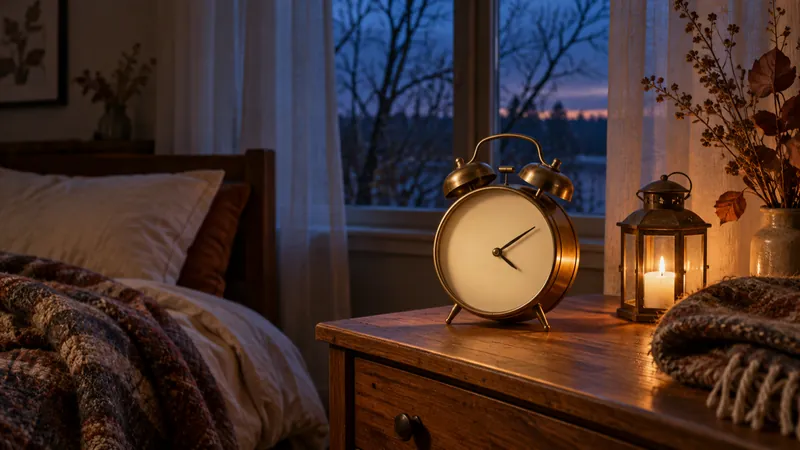
Sleeping better after the clocks go back
A day-by-day plan for the week of the change, and what helps if you wake an hour early.

Breathing exercises to help you fall asleep
Four breathing exercises to fall asleep, step by step: a longer out-breath, box breathing, 4-7-8 and a slow sigh. How to choose, and what to do if it backfires.
How to fall back asleep at 3am
What to do in the first few minutes after you wake, what to skip, and when it's worth seeing a doctor.
Bedtime stories for grown-ups
Why a slow, gentle story helps a busy adult mind let go, and how to drift off before the end.

Rain sounds for sleep
Why rain helps so many people settle, which kind suits your bedroom, and how loud to play it.
From JPott Studios
One calm email a month
One useful tip, one free printable or tool, and a short note from our apps. Join and get the free welcome pack: printable trackers, a packing list maker and more.