 MoonEase
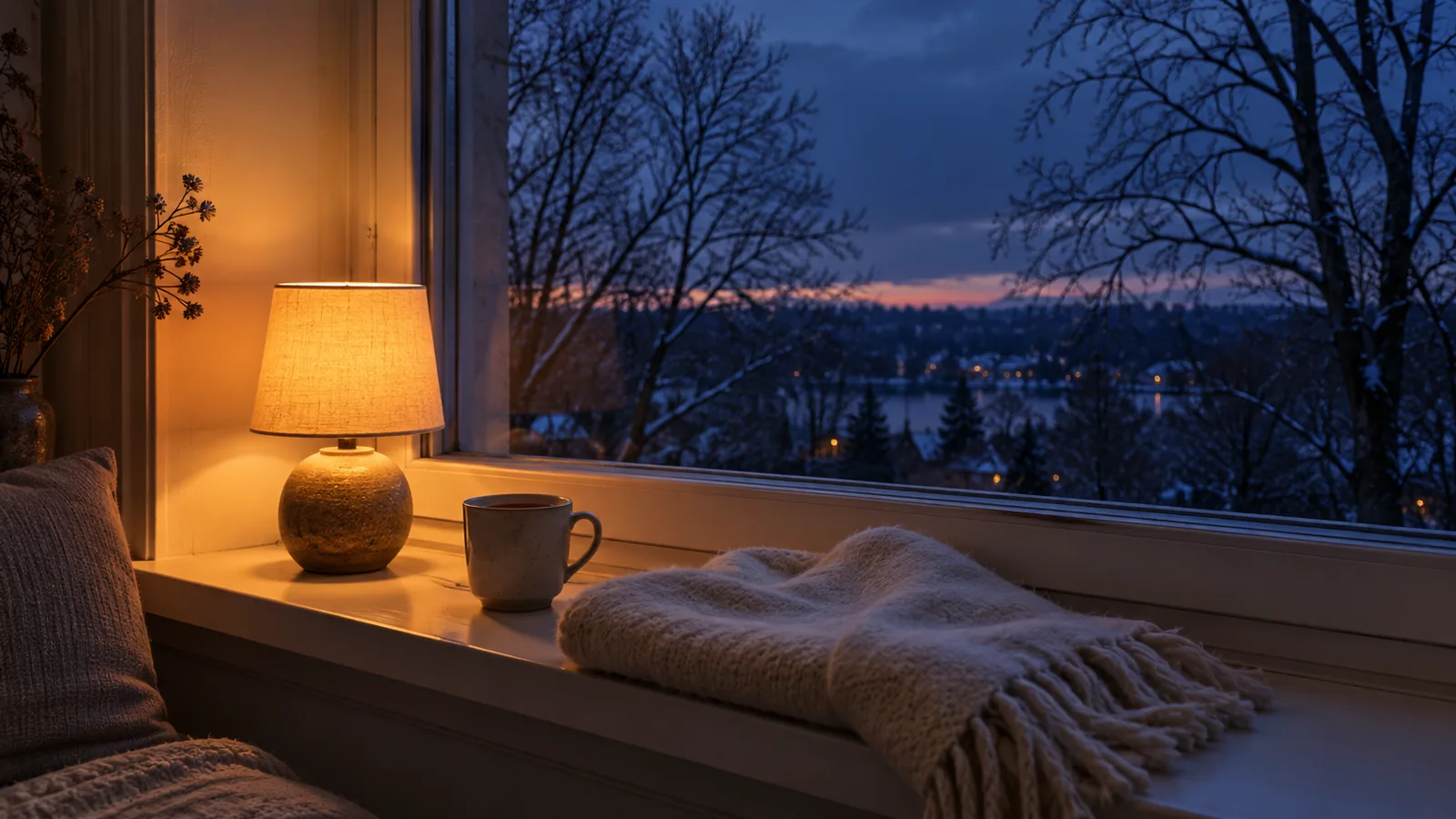
The best sleep tips for dark winter evenings come down to two things: get as much bright light as you can during the day, then keep the evening gently lit and awake until your usual bedtime, rather than letting the early dark send you to sleep at seven. Your wake-up time stays the same all season, and that one steady point holds everything else in place.
That's the short version. The longer one is below, set out as a troubleshooter. Find the moment in your evening that goes wrong, and start there.
Winter evenings, quick fixes
Match what happens to you with a first thing to try tonight.
- Yawning by sevenBrighten the early evening, then move a little.
- Lamps on at dusk
- A short walk
- Nodding off on the sofaGet up before the doze takes hold.
- Stand up
- Cool air
- Wired at bedtimeA calm, repeated wind-down, then lights off.
- Dim lamps
- Slow breathing
- Can't face dark morningsSame alarm every day, bright light straight away.
- Big light on
- Outside early
Why do dark winter evenings affect your sleep?
Your body keeps time mostly by light. Bright light, especially daylight, tells your internal clock that it's day. As light fades, your body starts releasing melatonin, the hormone that helps make you feel sleepy. It's a lovely system when sunset comes at eight. It's more awkward when sunset comes at half past four.
In winter, two things happen at once. Your days get dimmer, because you spend more of them indoors under ordinary lights, which are far weaker than daylight even on a grey afternoon. And your evenings get longer and darker, so there are more hours between "it feels like night" and the time you actually go to bed.
How long the dark lasts before a 10:30pm bedtime
Around the earliest sunsets of the year, in late November and December.
So the early dark nudges you toward sleep hours before bedtime, while the dim days leave your body clock without a clear signal of when "day" really was. The result is the pattern so many people notice from late October: drowsy too early, then oddly awake later on.
The dates make it sharper, too. The clocks went back in the UK on Sunday 25 October 2026, and they go back in the US on Sunday 1 November, so sunset jumps an hour earlier overnight. Jamaica doesn't change its clocks at all, so the evenings there simply draw in a little each week. If the change itself is what's thrown you, our bedtime routine for adults gives you a steady evening shape to hold on to.
What to do when you're sleepy by 7pm
Early-evening sleepiness in winter is common, and it's usually your body reading the darkness, not a sign you need to go to bed. Going to bed at seven tends to backfire, because you wake at two or three with a full night's rest behind you and a long wait until morning.
Instead, give your evening a bit more "day":
- Put the lamps on as the sun goes down, not an hour later. Sitting in the gloom while it gets dark outside tells your body the night has started.
- Keep the early evening brighter than the late evening. Brighter room lights while you cook and eat, softer lamps after about nine.
- Move after dinner. Washing up, a stroll round the block, ten minutes of tidying or a stretch on the floor can all lift that heavy feeling.
- Keep dinner moderate. A big, rich winter meal can make the sofa hard to resist.
This isn't about keeping yourself awake with strong light at eleven at night. Bright light late in the evening can push your body clock later, which is the opposite of what you want. Brighter until the washing up is done, softer after that.
What to do when you keep nodding off on the sofa
The sofa doze is the most common winter sleep thief. Twenty minutes of sleep at eight o'clock takes the edge off the tiredness you've built up over the day, and that tiredness is exactly what helps you fall asleep at bedtime.
A few simple tricks help:
- Notice the warning signs early: heavy eyes, rereading the same line, missing a bit of the programme. That's the moment to stand up, not five minutes later.
- Stand, stretch, and do one small job. Fill tomorrow's water bottle, lay out clothes, feed the cat.
- Cool the room slightly. A warm room plus a blanket plus a dark window is a recipe for dozing. Open a window for a minute or take the blanket off your lap.
- Sit up rather than lie along the sofa. It sounds too simple to work, but lying down is half of falling asleep.
If a nap does happen, don't be hard on yourself. Just move the rest of your evening along as normal, keep to your usual bedtime if you can, and get up at your usual time tomorrow. One sofa nap won't undo a good routine.
What to do when you're wide awake at bedtime
This is the other half of the winter pattern. You were drowsy at eight, you fought it off (or didn't), and now it's half past ten and your mind has switched on. It can feel unfair.
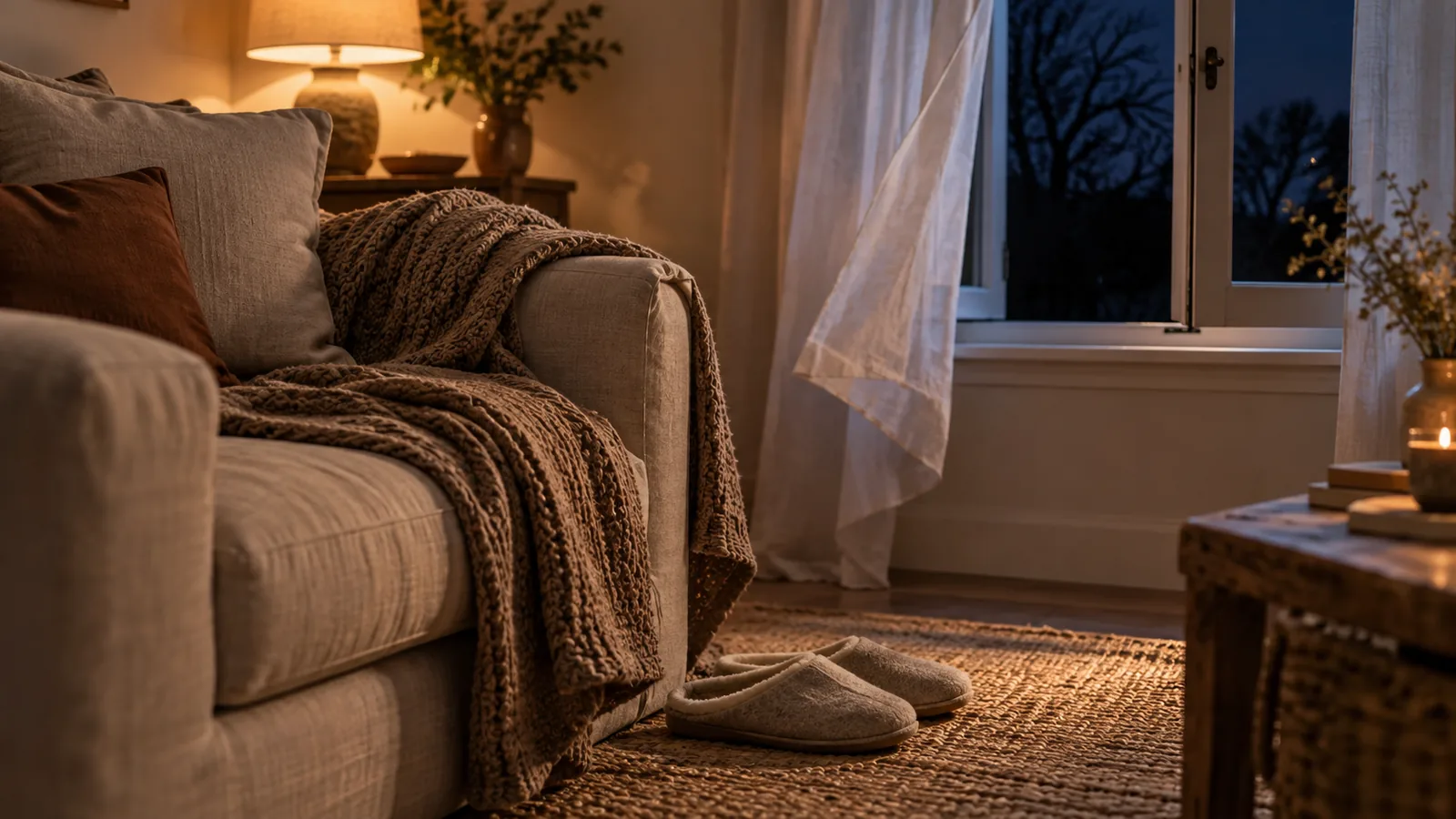
The fix is a wind-down that happens in the same order every night, so your body learns the cue rather than relying on the dark outside. It can be very short:
- About an hour before bed, switch to lamps only and put tomorrow's worries on paper.
- Half an hour before, do the same few things in the same order: teeth, face, a glass of water by the bed.
- In bed, give your mind something soft to follow, like slow breathing or a quiet, steady sound.
Rain is a favourite for winter nights, because it matches the season and covers the small noises of a quiet house. Our guide to rain sounds for sleep helps you pick the right kind. Keep the volume low and, if you'd rather the sound didn't play all night, use a timer that fades out. Our guide on sleep sounds all night or on a timer helps you choose.
If you're still awake after what feels like a long while, get up, go somewhere dim, and do something dull until you feel sleepy again. The same idea works in the small hours, and our guide to getting back to sleep in the small hours walks you through it.
From JPott Studios
One calm email a month
One useful tip, one free printable or tool, and a short note from our apps. Join and get the free welcome pack: printable trackers, a packing list maker and more.
What to do when dark mornings keep you in bed
Winter evenings and winter mornings are linked. If you get light late in the morning, your body clock drifts later, and that makes it harder to fall asleep at night. So the most useful thing you can do for your evenings actually happens at breakfast.
- Keep one wake-up time, every day, weekends included. It's the anchor for the whole season.
- Turn the main light on as soon as you get up, not a bedside lamp. You want your first few minutes to feel like day.
- Get outside in the first couple of hours after waking if you can. A walk to the bus stop, coffee on the doorstep, or ten minutes by the brightest window in the house. Daylight on a grey winter morning is still far brighter than indoor lights.
- Open the curtains fully the moment it's light. Sit near a window for breakfast or your first hour of work.
Midday light counts too. A lunchtime walk in winter gives your body clock the clear "this is day" signal it's missing, and many people find it lifts their afternoon as well as their night.
Interestingly, some research suggests our sleep does shift a little with the seasons. A 2023 study from the Charité hospital in Berlin, which looked at people having overnight sleep tests, found they spent more time in dream (REM) sleep in winter than in summer, even in a lit-up city. So feeling like you need a touch more rest in winter isn't laziness. The aim isn't to fight that, just to keep your nights at a sensible time.
When is it more than winter tiredness?
Lots of people feel slower and sleepier when the evenings draw in, and a bit of that is normal. For some, though, the darker months bring something heavier, sometimes called seasonal affective disorder, or SAD. It can include low mood most days, losing interest in things you normally enjoy, sleeping much more than usual and struggling to get through the day.
If that sounds like you, or if winter tiredness is getting in the way of work, family or everyday life, please talk to a doctor. There are real treatments, and it's worth asking rather than pushing through on your own. The tips in this guide are for everyday winter sleep, not a replacement for that care.
Where it's simply winter sluggishness, give the changes above a couple of weeks. Body clocks shift slowly, and the steady wake-up time does most of its good in the background. One easy extra: a bedtime reminder at the same time each night, so the dark outside isn't the only thing telling you when to start winding down. MoonEase has one built in, alongside sleep sounds and a timer that fades out.
This guide is general information, not medical advice. If sleep is a lasting problem, or low mood comes back every winter, please talk to a doctor.
Winter sleep questions
Why am I so tired when it gets dark early?
Darkness is one of your body's main signals to start winding down, so an early sunset can make you feel sleepy hours before bedtime. Dim winter days add to it, because your body clock gets a weaker "daytime" signal. Brighter mornings and a well-lit early evening usually help.
Is it OK to go to bed earlier in winter?
A slightly earlier bedtime is fine if you still wake at your usual time feeling rested. Going to bed at seven or eight often backfires, though, because you tend to wake in the small hours. A steady wake-up time matters more than an early night.
Do we need more sleep in winter?
Some research suggests sleep shifts a little with the seasons, including a 2023 Berlin study that found more dream sleep in winter. Most adults still do well with at least seven hours all year. If you feel you need far more sleep than usual, talk to a doctor.
How do I stop falling asleep on the sofa in the evening?
Keep the room brighter in the early evening, sit up rather than lie down, and stand up the moment your eyes feel heavy. Doing a small job, like laying out clothes or tidying up, usually passes the drowsy moment.
Does it help to go outside on a cloudy winter day?
Yes. Even an overcast winter sky is usually much brighter than indoor lighting. A short walk in the morning or at lunchtime gives your body clock a clear signal that it's day.
Let the dark evenings end softly
MoonEase gives long winter nights a gentle shape: a bedtime reminder at your chosen time, sleep sounds like steady rain and a crackling fire, slow breathing, and a timer that fades everything out once you're asleep. It works offline, with no ads.
Get MoonEase

More sleep guides

A bedtime routine for adults
A short evening plan you can keep: what to do in the hours before bed, and how to make it stick.

Rain sounds for sleep
Why rain helps so many people settle, which kind suits your bedroom, and how loud to play it.
How to fall back asleep at 3am
What to do in the first few minutes after you wake, what to skip, and when it's worth seeing a doctor.
From JPott Studios
One calm email a month
One useful tip, one free printable or tool, and a short note from our apps. Join and get the free welcome pack: printable trackers, a packing list maker and more.